Kanji is easily the biggest challenge to beginning Japanese learners. If you don’t know how to learn Kanji quickly and remember them for a long time, MochoMochi will share 6 ways to learn Kanji below.
This video provides you with resources and methods needed to practice basic Japanese step by step:
1. Overview of Kanji
After learning Hiragana and Katakana, what you should go for next is Kanji – the hardest part of Japanese language.
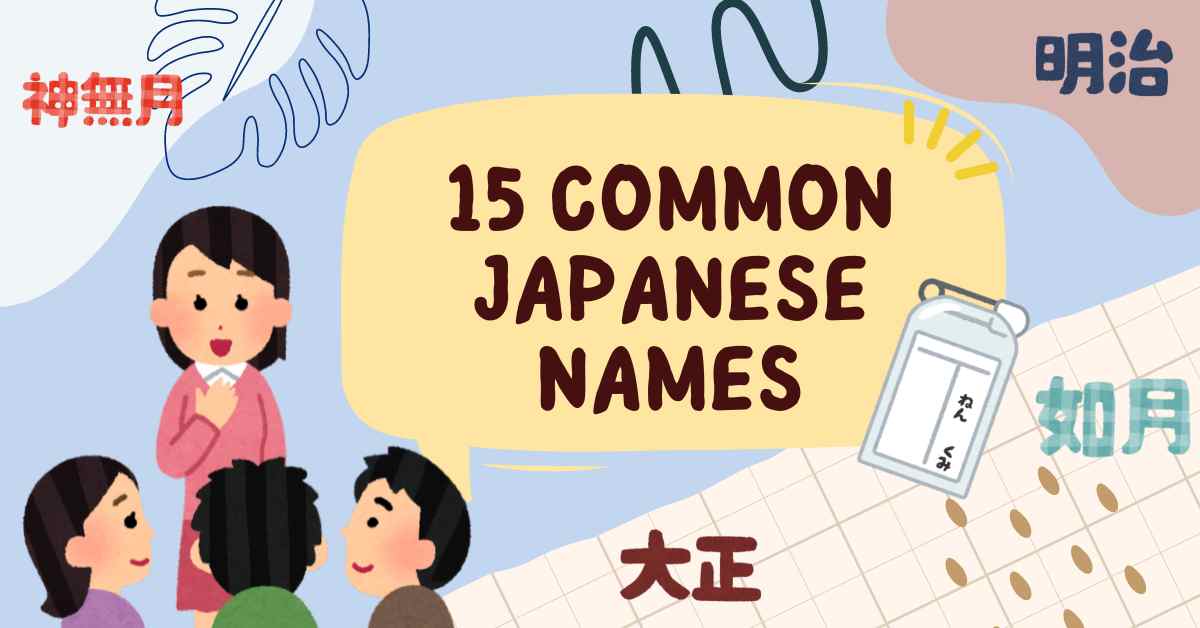
In the picture above, the red letters are Kanji. As you see, 80% of the text is written in Kanji and the same goes for almost all Japanese documents. Japanese people rely on kanji to distinguish synonyms and help shorten sentences. This is also a common feature of Japanese texts. You may wonder why the Japanese use so many Kanji. Because they use Chinese characters to fix synonyms and shorten the length of sentences.
Each Kanji usually has 2 syllables: On (On-Yomi) and Kun (Kun-Yomi). What’s the difference between these two sounds?
- When standing with other Kanji, it usually takes the On-yomi readings.
- When Kanji stands alone or with Hiragana, it takes the Kuyo-yomi readings.
However, there are also exceptions. For example:
You will need about 2000 Kanji to be able to read and understand Japanese books. At the beginner level N5, it is necessary to learn 100~150 words. With that in mind, we always encourage learners to be extra careful in choosing the right learning method so they can start off on the right foot with kanji. Let’s find out with MochiMochi!
2. 6 effective ways to learn Kanji for beginners
2.1 How to learn Kanji #1: Using Flashcards
A flashcard contains the word on one side and extra information like meaning, phonetic transcription, or illustration images on the other side.
Frontside: Usually designed to write Kanji.
Backside: Usually used to contain On-Kun sounds and related words.
How to learn:
Look at the side containing the Kanji, and say out loud the meanings and related words. Please stimulate your memory as much as possible to recall the answer before turning over to the other side. Practice over and over again for the best memorization results.
Notes on using flashcards :
- Use both sides of flashcards sensibly, and see them several times to remember information.
- Don’t put too much information on a flashcard.
- Use illustrations: The more interesting the flashcard illustration, the easier it will be to remember.
- Always carry flashcards and create a daily review routine like brushing your teeth or taking a shower.
- Often change the order of flashcards: Shuffle the flashcards after each review to avoid memorizing the order, following the pattern.
- Mark the flashcards that have been memorized, after marking them 2-3 times, those flashcards can be set aside and reviewed after a longer time. If you don’t remember words, you should spend more time reviewing them.
#Pros: Flashcards have a compact, convenient design that can be taken anywhere, helping you to actively learn at any time such as on the bus, train, etc. The more you use it, the longer you remember it.
#Cons: Due to the compact design, there is limited space for information you should put on your flashcards. You should still have a notebook to record vocabulary and use flashcards as a way to review.
2.2 How to learn Kanji #2: Learn with apps
Along with the development of science and technology, learning Japanese online through applications, videos, and online tools is becoming more and more popular. Choose the right tool and your learning will be much less of a challenge, more flexible and convenient.
There are many online learning apps with diverse features on the market. These include popular applications which are trusted by many students such as MochiMochi, Quizlet, or Anki are built on the basis of Flashcards and studies on human memory.
Notes on learning:
- Have high self-discipline and determination: One con of learning Japanese using apps is a lack of supervision and necessary pressure that help you stay motivated so self-study requires a lot of discipline and persistence.
- Make the habit of taking notes: Don’t just solely rely on your digital devices because you will forget what you learn very quickly. Always carry a physical notebook with you so you can note down the highlights of your lessons.
#Pros: Learn anytime, anywhere. Get rid of boredom
#Cons: Easy to be distracted by other factors when learning on a phone or computer.
In addition, you can also refer to other Japanese learning software to choose the most suitable application for you!
2.3 How to learn Kanji #3: Imagine
Association from Pictures → Words
The origin of Kanji is ideograms, invented by the ancient people based on their perception of the outside world. Therefore, one of the interesting ways to learn Kanji is to imagine and compare words according to surrounding objects and phenomena.
Example:
It is easy to see, from the image of square fields or trees, after simplifying the strokes, we have the final result of the kanji “Rice field” and “Wood”. Based on the way of association, you can both remember the word’s image and grasp the meaning of that kanji.
Similar to the pictures below, try to guess which kanji corresponds to the picture:
The answer is: 1-c 2-b 3-a
Figure 1: Mountain → 山
Figure 2: Fire → 火
Figure 3: Sprouts grow from the ground (soil, ground)→ 土
Just now is the way to associate Pictures → Words. There is another way to help you remember the meaning of complex words more easily, which is to try the reverse association from Words → Picture.
Based on the meaning of Kanji, think of images and stories that best match the meaning of the word. The more unique and interesting the stories, the more imprinted in your memory. The interesting point of this method is that there is no standard answer because it depends on the imagination and creativity of each person.
Example:
Ancient people tell time by observing the position of a stick exposed to the sun’s rays, and that is how the kanji word “time” was invented.
Pros: By associating a Kanji through vivid images close to the meaning of the word, you will understand Kanji better, and remember it longer.
Cons: This method only works up until N5 and N4 levels. It will be harder to apply this technique with more advanced kanji as it will no longer be easy to associate.
In addition, you can refer to the following documents:
“Kanji look and learn” – The Japan Times – Download
“Remember the Kanji” – James Heisig
“Kanji Pict-O-Graphix” – Michael Rowley
2.4 How to learn Kanji #4: Write kanji over and over again!
Writing is that old but gold technique to help learners in any given target language.
How to learn:
- You only need to prepare a notebook to write Kanji (recommended using a cross-section notebook)
- Write over and over again the Kanji you need to learn. When writing, you can both use the On and Kun sound. You should also combine writing and reading out loud the word for a better impact on your memory.
- Actively write and connect Kanji words into meaningful words and sentences. In the process of learning grammar or practicing writing, try to practice writing Kanji as much as possible with the words you have learned.
Pros: Practice how to write as well as memorize the image and meaning of words. When you need to write a kanji that you can write without thinking, that’s when that kanji is already in your long-term memory.
Cons: It takes a lot of time and space to practice writing. The first few kanji are always easy to learn and remember. But as your kanji input increases over time, you’ll get confused between characters with similar strokes. This learning method is also infamously boring.
Reference materials: Kanji practice books are sold at bookstores nationwide or practice writing with ellipticals. Or you can download standard Japanese paper templates to practice writing.
2.5 How to learn Kanji #5: Learn Kanji through radicals
The radicals is the basic component that makes up the Kanji, and is itself a Kanji. However, there will be modifiers that are different from the original. For example: 水 → 氵, 人 → 亻. A kanji is composed of two or more radicals. There are 214 radicals total with each carrying a unique meaning.
Mastering the radicals will help a lot in memorizing and guessing the meaning of Kanji. For example, words that contain a set of the Water 氵 in them are often related to to water, rivers, lakes, etc. 忄 meaning heart – are often related to emotions and feelings. At beginner level, you don’t need to learn all of the 214 radicals but just 30 basic sets are enough to help you learn Kanji.
How to learn:
- You should break a kanji into smaller radical components and make a guess at the word’s meaning based on the meaning of the radicals.
- Choose kanji with the same radicals, thereby you can recognize the similarities in the meanings of the words. Can be used in conjunction with flashcards to memorize.
Pros: Once you have mastered the radical, you will easily analyze Kanji when studying at a higher level. That way, it can be easier to remember the meaning, which is also easier to write out the word. In addition, when taking the exam, you can rely on the radical to guess the meaning and choose the correct answer.
Cons: This method is suitable for complex kanji of intermediate and advanced levels because it is assembled by many radicals. At the elementary level, it is quite complicated.
3. Notes on learning Kanji
Learn at the right time
Some often try to cram lots of words in a short period of time. But according to research on how our brain forgets things, there is a 70% probability that our brain will forget a newly learned word after 24 hours without reviewing it. Therefore, the key to memorizing is not to learn a lot, but to “Learn at the right time”. The correct calculation of the review time will help promote the best memorization ability.
Don’t force yourself to memorize all the On-Kun sounds of each word
Don’t focus too much time on learning all the On and Kun sounds of each word, because there are a lot of On-Kun sounds that are not often used. Instead of learning each word individually, try to learn new words related to that kanji and you will gradually get the hang of how to read the word.
Hopefully our sharing will help you overcome your fear of Kanji. I Hope you always have fun with Japanese and have success in the future!